Buying in Mexico
Ejido land: why the cheapest lot on the coast may not be for sale at all
Communal farmland, the certificate that looks like a title but isn't, and the one question that separates the two.
General education, not legal or tax advice. Requirements vary by state, municipality, notario, SAT office, and year — confirm current specifics with your Notario Público, an attorney, and a cross-border accountant before acting.
Why readers ask
Sooner or later every buyer on this coast is shown the lot that doesn't add up — ocean view, half the price of everything around it, a seller with an official-looking stamped certificate, and a reason the closing should happen quickly and quietly. The paperwork is often genuine. That is exactly what makes it dangerous: it is a real document that grants real rights, just not the right to sell you the land.
How do I know the land I'm being shown isn't still ejido?
Ejido land is communal land held under the Ley Agraria — it is not private property, and it cannot be sold to you while it stays that way. Parcel rights may only be transferred to *other ejidatarios or avecindados of the same núcleo de población* (Art. 80), a category no foreign buyer can ever be in. Land becomes sellable private property only after the ejido assembly authorises dominio pleno, the *Registro Agrario Nacional* cancels its registration, and a título de propiedad is issued and recorded in the local Registro Público de la Propiedad (Arts. 81–82). That last inscription is the whole test. No inscription, no sale.
## Two kinds of land, dressed almost identically
Roughly half of Mexico's territory was distributed as *ejido* — communal land granted to a village population, worked by *ejidatarios*. It has its own federal statute (the Ley Agraria), its own registry (the *Registro Agrario Nacional*), and its own courts (*tribunales agrarios*). None of that machinery is the property system a foreign buyer is used to, and none of it produces a deed.
An ejidatario genuinely holds rights. They can farm the parcel, pass it on, and enter contracts to let others use the land for up to thirty years (Art. 45). What they cannot do — while the land is still ejido — is sell it to you.
## The only route out: dominio pleno
Articles 81 and 82 set out the conversion, and the sequence matters:
1. Most parcels in the ejido must already be delimited and assigned to individual ejidatarios.
2. The assembly resolves that ejidatarios may adopt *dominio pleno* — with the heightened formalities of Arts. 24–28 and 31, not a casual vote.
3. The individual ejidatario then elects to take dominio pleno over their parcel.
4. The RAN cancels the registration and issues a *título de propiedad*.
5. That title is inscribed in the Registro Público de la Propiedad.
Article 82 then says the decisive thing: from the cancellation of the RAN registration, *"las tierras dejarán de ser ejidales y quedarán sujetas a las disposiciones del derecho común"* — the land stops being ejido and becomes ordinary property. Only at that point does a normal sale, a notario, and a fideicomiso become possible.
## The trap that survives conversion
Here is the part almost nobody is told. Even after dominio pleno, the first sale to an outsider is not free and clear.
Article 84 gives a *derecho del tanto* — a right of first refusal — on that first sale, to the seller's family, anyone who worked the parcel for more than a year, the other ejidatarios, the *avecindados*, and the ejido population itself, in that order, exercisable within thirty calendar days of notification.
And then, in eleven words that should govern your due diligence: *"Si no se hiciere la notificación, la venta podrá ser anulada."* If the notification was not given, the sale can be annulled.
That is a defect you inherit. The land can be fully converted, the title genuine, the notario cooperative — and the sale still unwindable years later because a step nobody documented was skipped.
## What a *cesión de derechos* actually hands over
The document most often waved at foreign buyers is a *cesión de derechos parcelarios* — a transfer of parcel rights. Under Article 80 it is valid only between ejidatarios and avecindados of the same núcleo, and even then only with written consent before two witnesses ratified by a *fedatario público*, notice to spouse and children (who hold their own thirty-day derecho del tanto), and written notice to the *comisariado ejidal*.
Sold to an outsider, it transfers nothing a court will protect. It cannot be inscribed as a deed. It cannot go into a bank trust. There is no route from it to ownership.
## "We'll regularise it after closing"
Read the sequence in Articles 81–82 again and notice who controls it. Conversion needs an assembly resolution of the whole ejido. A seller cannot promise it, a broker cannot accelerate it, and a *comisariado* signature cannot substitute for it. A promise to regularise later is a promise to deliver something the promiser has no power to deliver.
- "The comisariado signed it, so it's approved." The *comisariado ejidal* represents the ejido — it cannot convert land. Only the assembly can resolve dominio pleno, and only the RAN can cancel the registration and issue title (Arts. 81–82).
- "A cesión de derechos is basically a deed." It is a transfer of communal parcel rights, restricted by Art. 80 to ejidatarios and avecindados of the same núcleo. It cannot be inscribed as private title or placed in a fideicomiso.
- "A certificado parcelario proves ownership." It proves the opposite — a parcel certificate exists *because* the land is still in the Registro Agrario Nacional, which is to say still ejido.
- "The notario would have caught it." A notario will. That is precisely why sales of unconverted ejido land are steered toward private agreements and away from one.
- "Dominio pleno is a formality once everyone agrees." It requires most parcels already delimited and assigned, plus an assembly resolution under the formalities of Arts. 24–28 and 31.
At move-in
- Ask one question first: is this inscribed in the Registro Público de la Propiedad? Ask for the inscription details, not a description of them. Everything else is secondary.
- Learn to recognise the wrong documents. A *certificado parcelario*, a *cesión de derechos*, or an assembly minute is not title. If that is what exists, the land is still ejido.
- If dominio pleno is recent, ask whether this is the first sale out of the ejido — and require written evidence that the Art. 84 notification was made. This is the defect that survives an otherwise clean title.
- Never send funds against agrarian paperwork, however official the seals look.
- Instruct your own notario. Not the seller's, not the broker's.
- Price is the tell. On this coast, a coastal or view lot at a fraction of its neighbours usually reflects a title problem, not a bargain.
Reality Check
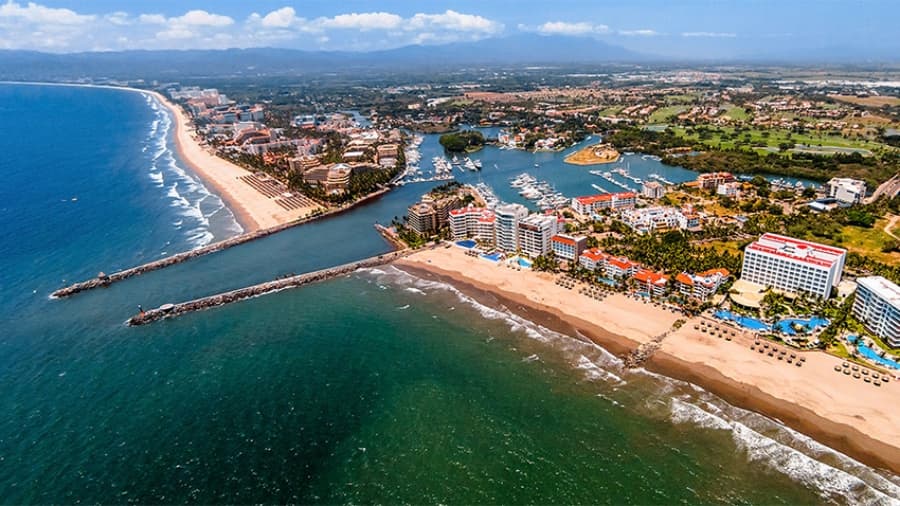
Puerto Vallarta · Riviera NayaritFederal law
The Ley Agraria, the *Registro Agrario Nacional* and the *tribunales agrarios* are federal and apply identically in Jalisco and Nayarit. The conversion route (Arts. 81–82), the Art. 80 restriction on who may receive parcel rights, and the Art. 84 right of first refusal are national rules, not local practice.
Jalisco considerations
On the Puerto Vallarta side, the consolidated urban core is overwhelmingly private property with ordinary title history, and converted land records in the Jalisco Public Registry. Exposure rises as you move outward and upward — the hillsides, the outskirts and the Sierra behind the city, where land was distributed as ejido and some of it has never been converted.
Nayarit considerations
This is the higher-exposure side of the bay. Much of the Riviera Nayarit — Nuevo Vallarta, Bucerías, La Cruz, Punta de Mita, Sayulita and the coast north of them — originated as ejido and required conversion before any of it could be sold. Converted land records in the Nayarit Public Registry. The established, master-planned developments were converted decades ago and are not the concern; raw land, hillside parcels and "beach lots" offered informally are.
Puerto Vallarta / Riviera Nayarit reality check
The bay's pattern is consistent: structured product is safe, informal land is where risk lives. A unit in a registered condominium from an established developer sits on land whose title was resolved long before construction financing was possible. The risk concentrates in unbuilt land sold peer-to-peer — often with a compelling story about why it is cheap and why the paperwork is unusual.
Practical local implications
Ejido origin is not a red flag by itself — a large share of legitimately owned, fully titled coastal property on this bay was ejido land at some point, lawfully converted. The question is never *was this ejido?* but *was the conversion completed, inscribed, and was the first sale properly noticed?* Both are answerable from the public record in an afternoon, by a notario you chose. Any pressure to skip that step is itself the finding.